Google Block Breaker Rules | Complete Guide to Scoring, Lives, Power-Ups & Winning 2026
Most people open Google Block Breaker and just start playing — no idea how scoring works, why some blocks need multiple hits, or what triggers game over.
That’s fine for the first few rounds. But if you want to actually improve, knowing the rules changes everything.
This guide covers every rule in Google Block Breaker — the core mechanics, how the scoring system works, what each power-up does, how lives are counted, and the strategies that follow from understanding the rules properly. Whether you’re playing for the first time or trying to push your high score higher, start here.
What Is Google Block Breaker — Core Concept
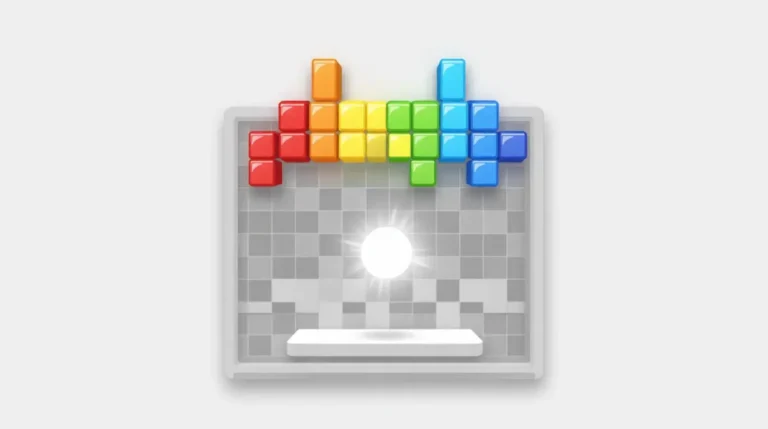
Google Block Breaker is a browser-based arcade game hidden inside Google Search. The concept comes from classic brick-breaking games of the 1970s and 80s — paddle, ball, blocks.
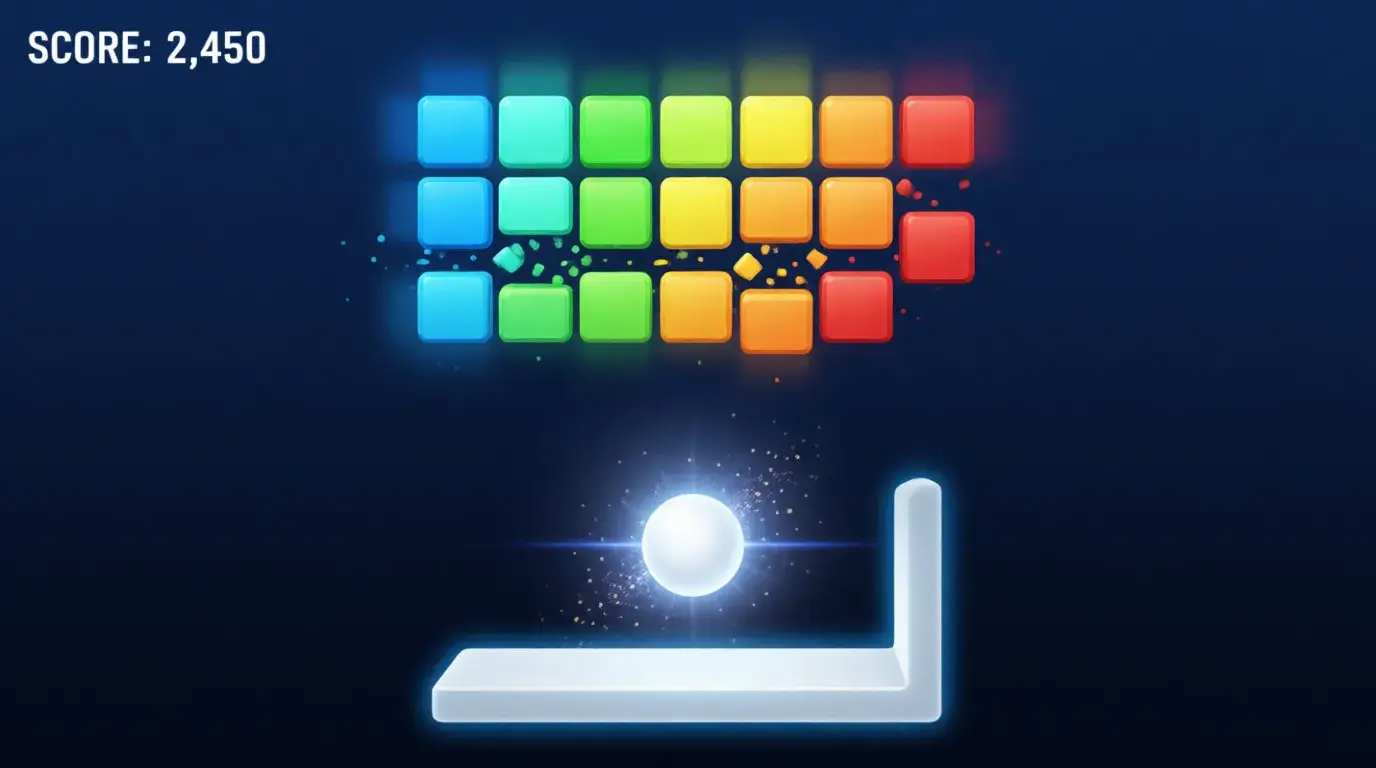
Your job is straightforward: use a paddle to bounce a ball upward and destroy every breakable block on the screen. Clear all the blocks and you advance. Let the ball fall past your paddle and you lose a life.
Simple to understand. Genuinely difficult to master.
How does Google Block Breaker work at its core? The game runs on browser-based physics — the ball follows real angle-of-incidence rules, meaning where it hits a surface determines exactly where it goes next. This isn’t random. Every bounce is predictable once you understand the system.
To play right now before reading further, visit googleblockbreaker.net — the game loads instantly on the homepage.
Google Block Breaker Rules — The Complete Breakdown
Rule 1: Control the Paddle
Your paddle sits at the bottom of the screen and moves left and right only. On desktop, move it with your mouse or left/right arrow keys. On mobile, swipe left and right.
The paddle never moves up or down. Everything depends on your horizontal positioning and timing.
Rule 2: Keep the Ball in Play
The ball launches from your paddle at the start of each round. Once in play, it bounces between the ceiling, side walls, blocks, and your paddle continuously.
Your only job is to make sure the paddle is under the ball every time it drops. Miss once and you lose a life.
Rule 3: Destroy All Breakable Blocks
Each level has a grid of colored blocks at the top of the screen. Your goal is to destroy every breakable block by hitting them with the ball.
Some blocks break in one hit. Others require multiple hits. A few are completely indestructible — you don’t need to break those, just work around them.
Rule 4: Lives System
You start each game with 3 lives. Every time the ball falls past your paddle, you lose one life. When all 3 lives are gone, the game ends.
Some power-ups can restore lives — more on those below. There is no way to pause and recover. Once a life is lost, it’s gone unless a power-up replaces it.
Rule 5: Level Completion
Clear all breakable blocks and the level ends. The game moves to the next level automatically, which introduces faster ball speed and more complex block arrangements.
There is no final level — the game continues indefinitely with increasing difficulty until you lose all your lives.
Google Block Breaker Scoring System
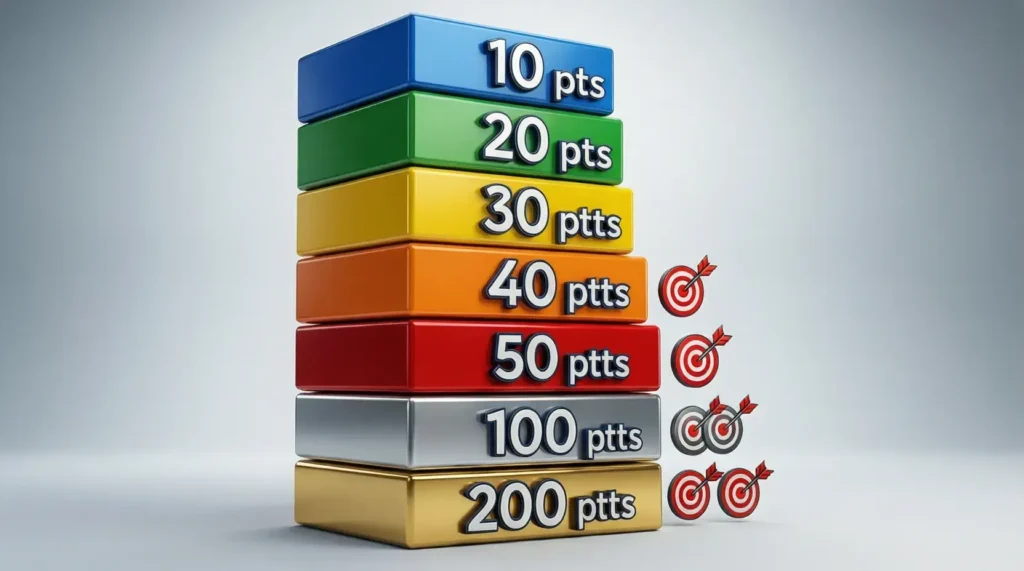
Understanding scoring is what separates casual players from high scorers. Points are not equal across all blocks — color and block type both determine value.
Points by Block Color
| Block Color | Points Per Hit | Hits to Break |
|---|---|---|
| Blue | 10 | 1 |
| Green | 20 | 1 |
| Yellow | 30 | 1 |
| Orange | 40 | 1 |
| Red | 50 | 1 |
| Silver | 100 | 2 |
| Gold | 200 | 3 |
Red, silver, and gold blocks are always the priority targets. A single gold block gives 200 points — twenty times the value of a blue block.
Combo Multipliers
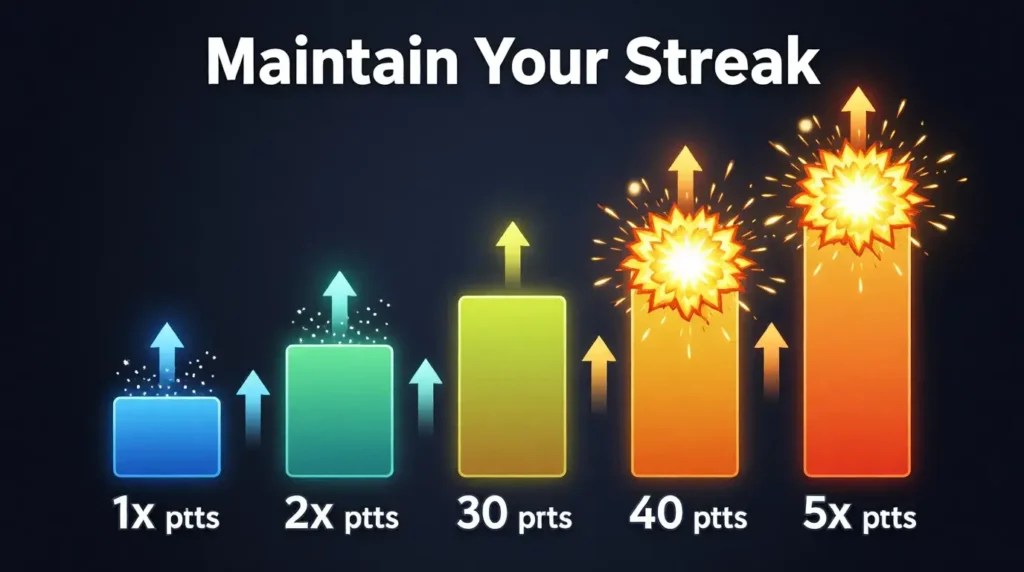
Consecutive block hits without the ball falling build a combo multiplier:
| Combo Level | Multiplier |
|---|---|
| 1-2 hits | 1x (base) |
| 3-5 hits | 2x |
| 6-10 hits | 3x |
| 11-15 hits | 4x |
| 16+ hits | 5x |
A 5x combo on a gold block gives 1,000 points from a single hit. This is how elite players build massive scores — not by hitting more blocks, but by maintaining longer combos on high-value targets.
Dropping the ball resets the multiplier to 1x immediately.
Level Completion Bonus
Clearing all blocks in a level awards a completion bonus — typically 500 to 1,000 points depending on the level. Faster completion times can add extra points on top of that.
Remaining lives also add bonus points at level end — usually 250 to 500 points per unused life.
Google Block Breaker Rules — Block Types Explained
Not all blocks behave the same way. Understanding block types is essential to both scoring and strategy.
Standard blocks break in one hit. These make up the majority of each level’s grid. Colors range from blue (lowest value) to red (highest single-hit value).
Multi-hit blocks — silver and gold — require 2 and 3 hits respectively. They don’t change position or fight back, but they demand repeated targeting. Use power-ups to clear these efficiently.
Indestructible blocks — usually gray or with a distinct pattern — cannot be broken at all. They act as permanent obstacles. Your ball will bounce off them. Design your trajectory around them rather than trying to destroy them.
Power-up blocks — when hit, these release a falling power-up item instead of just disappearing. Catch the falling item with your paddle to activate it.
Power-Ups — Rules and Strategy
Power-ups are a core part of Google block breaker game rules that most players underutilize. They drop from special blocks and fall toward your paddle. If you catch them, they activate immediately.
Here is every power-up and how to use each one:
Multi-Ball
Splits the current ball into two or more balls simultaneously. Every ball independently bounces and destroys blocks.
Rule: If all balls fall past your paddle at the same time, you lose a life. Keep at least one ball alive.
Best use: Dense block sections where multiple balls clear wide areas quickly. Most powerful power-up in the game for score building.
Paddle Expansion
Increases your paddle’s width temporarily — typically lasting 15 to 30 seconds.
Best use: When the ball is moving fast and you’re struggling to react in time. Also useful when you have multi-balls in play and need more coverage.
Caution: A wider paddle makes sharp-angled shots harder to execute. If precision matters more than safety in your current situation, let this one fall.
Laser Beam
Adds a shooting function to your paddle. You can fire lasers upward to destroy blocks directly without needing the ball to reach them.
Best use: Hard-to-reach blocks in corners or behind indestructible block barriers. Combine with multi-ball for maximum clearing power — you’re destroying blocks from two directions simultaneously.
Sticky Paddle
The ball sticks to your paddle on contact instead of bouncing immediately. You hold it briefly and release it with a click or tap, giving you control over the launch angle.
Best use: When you need a precise shot at a specific block cluster or when you want to set up a trap shot through the top rows.
Extra Life
Adds one life to your remaining count, up to a maximum of 5 lives in most versions.
Rule: Always catch this one. No situation exists where an extra life is the wrong choice. Prioritize it over every other power-up.
Slow Ball
Temporarily reduces ball speed. Duration is usually 10 to 20 seconds.
Best use: When ball speed has increased significantly in later levels and you need to regain control. Gives you time to reposition and plan shots carefully.
Shield / Barrier
Adds a temporary safety net across the bottom of the screen below your paddle.
Best use: When multiple balls are in play and you want to take aggressive risks without immediately losing a life if one slips past. Use the safety window to attempt difficult angle shots.
Speed Boost
Increases ball speed temporarily. This is a negative power-up for most players.
Best use: Only collect this if you have strong reflexes and want faster point accumulation in early levels. In later levels, avoid it — the game is already fast enough.
For a deeper breakdown of how each power-up interacts with different level layouts, see our how to play Google Block Breaker guide.
Google Block Breaker by the Numbers
Why these rules matter beyond casual play:
- The game has been accessible in Google Search since 2013 — over a decade of players learning and refining these rules
- Community-reported scores range from 5,000 points for casual players to 50,000+ for elite players who understand the scoring system deeply
- The difference between a 5,000-point game and a 30,000-point game comes almost entirely from combo maintenance and high-value block targeting — not from playing longer
- Players who understand power-up rules report 40-60% longer average game sessions compared to those who play without strategy
- The combo multiplier system means a single well-maintained run of 16+ consecutive hits generates 5x the points of the same blocks hit individually
These numbers make one thing clear: the rules aren’t just formalities. They’re the entire game.
Google Brick Breaker Rules — Advanced Mechanics
Ball Physics and Angle Control
This is the most important mechanical rule to internalize: where the ball hits your paddle determines exactly where it goes next.
- Ball hits center of paddle → goes straight up
- Ball hits left quarter of paddle → angles left at roughly 45 degrees
- Ball hits far left edge → sharp left angle, nearly horizontal
- Same rules apply mirror-image on the right side
This means you have full directional control over the ball at every paddle contact. You are never at the mercy of random bounces — every trajectory is a choice.
Speed Escalation Rules
Ball speed increases automatically as you clear blocks:
- 0-30% blocks cleared: Base speed
- 30-60% cleared: Moderate speed increase
- 60-80% cleared: Significant speed increase
- 80-100% cleared: Maximum speed — fastest the game gets
This rule explains why the last few blocks in a level are the hardest to clear. The ball is at peak speed with minimal blocks to slow its path. Use the sticky paddle power-up in this phase if you have it.
The Trap Shot Rule
This is an advanced technique that follows directly from the game’s physics rules. If you break a gap through the top rows of blocks and angle the ball through that gap, the ball enters the space between the top blocks and the ceiling.
Once there, it bounces rapidly between ceiling and remaining blocks — clearing multiple blocks per second without needing paddle contact. Your score jumps dramatically during a trap shot sequence.
Setting it up: Break a vertical column from bottom to top, then use an edge hit to send the ball through the gap at a steep angle.
Common Rule Violations That Cost Players
Forgetting the combo reset rule. Many players don’t realize dropping the ball resets their multiplier to 1x. They play carelessly and wonder why their score is low despite hitting many blocks.
Misunderstanding indestructible blocks. New players waste time trying to target gray blocks and get frustrated. These blocks cannot be broken — bounce off them strategically instead.
Ignoring power-up timing rules. Power-ups fall at a fixed speed. If you move your paddle to catch one and the ball falls behind you, you lose a life. The rule is always: ball survival first, power-ups second — except for extra lives.
Not understanding level completion bonus rules. Players who clear the last block with 0 lives remaining obviously end the game. But players who lose unnecessary lives during a level lose out on the per-life completion bonus. Keep your lives.
Winning Strategy — Rules Applied
Now that the rules are clear, here’s how they translate into winning play:
Target gold and silver blocks first. The scoring rules make this obvious — 200 points per hit on gold versus 10 on blue. Clear a path to high-value blocks early.
Never let a combo drop. The multiplier rules mean a sustained 5x combo is worth five times as much as scattered hits. Ball survival isn’t just about staying alive — it’s about protecting your multiplier.
Use power-ups according to situation, not impulse. The rules for each power-up have clear best-use cases. Match the power-up to what the level needs. Speed boost in a fast level? Let it fall. Extra life anytime? Always catch it.
Plan the trap shot. Once you know the ball physics rules, the trap shot becomes a deliberate strategy, not a lucky accident. Build toward it intentionally from the start of each level.
For high score specific strategies that build on these rules, our Google Block Breaker high score guide covers elite-level techniques in detail.
Frequently Asked Questions
What are the basic Google Block Breaker rules? Control a paddle at the bottom of the screen to bounce a ball into colored blocks above. Break all breakable blocks to complete a level. You lose a life each time the ball falls past your paddle. The game ends when all 3 lives are gone.
How does Google Block Breaker work with its scoring system? Each block awards points based on color — blue gives 10 points, red gives 50, silver 100, and gold 200. Consecutive block hits without dropping the ball build a combo multiplier up to 5x. Maintaining long combos on high-value blocks is how big scores happen.
What are Google brick breaker rules for power-ups? Power-ups fall from special blocks when hit. Catch them with your paddle to activate. Effects are temporary — typically 15 to 30 seconds. Extra life is the only power-up worth catching in every situation. Others depend on your current game state.
How does ball angle control work in Google Block Breaker? Where the ball contacts your paddle determines its rebound angle. Center contact sends the ball straight up. Edge contact creates sharp angles left or right. This gives you full directional control over the ball at every paddle hit.
How many lives do you get in Google Block Breaker? You start with 3 lives. Losing the ball costs one life. The extra life power-up can restore lives up to a maximum of 5. When all lives are gone, the game ends and your final score is recorded.
What happens to indestructible blocks in Google Block Breaker? Indestructible blocks — usually gray — cannot be destroyed regardless of how many times they’re hit. They act as permanent obstacles. Bounce your ball off them strategically. You only need to clear all breakable blocks to complete a level.
What is the combo multiplier rule in Google Block Breaker? Every consecutive block hit without dropping the ball increases your multiplier — from 1x base up to 5x at 16+ consecutive hits. Dropping the ball resets it to 1x immediately. This is the most important scoring rule in the game.
Final Thoughts
Google Block Breaker looks like a simple game. Under the surface, the rules create a genuinely deep system — physics-based ball control, a multiplier-driven scoring system, situational power-up mechanics, and escalating difficulty that demands adaptation.
Most players never learn the rules properly. They play on instinct, hit blocks randomly, and wonder why their scores plateau.
Now you know exactly how every system works. Apply the combo rules, target high-value blocks first, use power-ups with intention, and set up the trap shot deliberately.
Ready to put these rules into practice? Play Google Block Breaker now — everything covered in this guide applies from your very first ball launch.