How Long Is 16 Inches? Hair, Objects, Baby & More Explained
16 inches comes up in more places than people expect. Hair length, jewelry sizing, pregnancy milestones, everyday objects. The number alone does not tell you much, but once you connect it to something familiar, it clicks immediately.
This guide covers every angle people actually search for, from straight hair and curly hair to extensions, wigs, necklaces, chains, baby size, and real-world object comparisons. Competitors cover the objects. This guide covers everything.
How Long Is 16 Inches Exactly?
16 inches is a measurement from the imperial system used primarily in the United States. Here are the exact conversions:
- 16 inches in cm: 40.64 centimeters
- 16 inches in feet: 1.33 feet (one foot and four inches)
- 16 inches in mm: 406.4 millimeters
- 16 inches in meters: 0.4064 meters
- 16 inches on a ruler: A standard ruler is 12 inches. 16 inches extends four full inches beyond the end of a ruler.
The simplest mental image: one foot plus the width of four adult fingers placed side by side. That extra four inches beyond a ruler is what most people underestimate.
How Long Is 16 Inches Compared to Objects
The fastest way to picture 16 inches is to match it with something you already own or use regularly.
Laptop Screen (Diagonal)
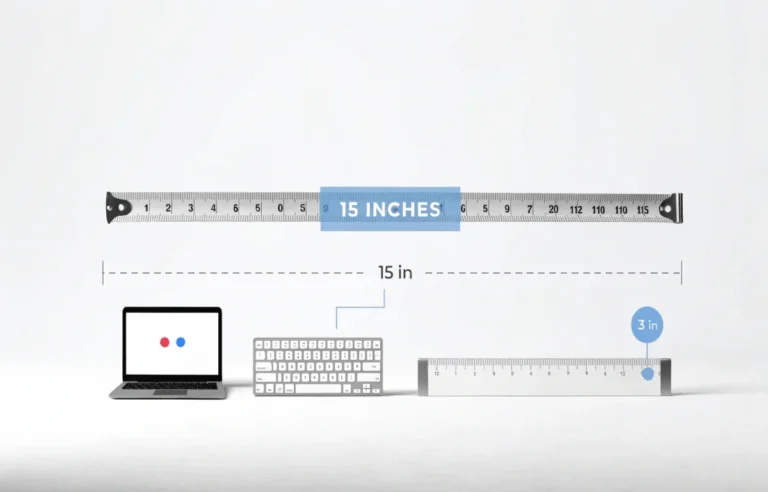
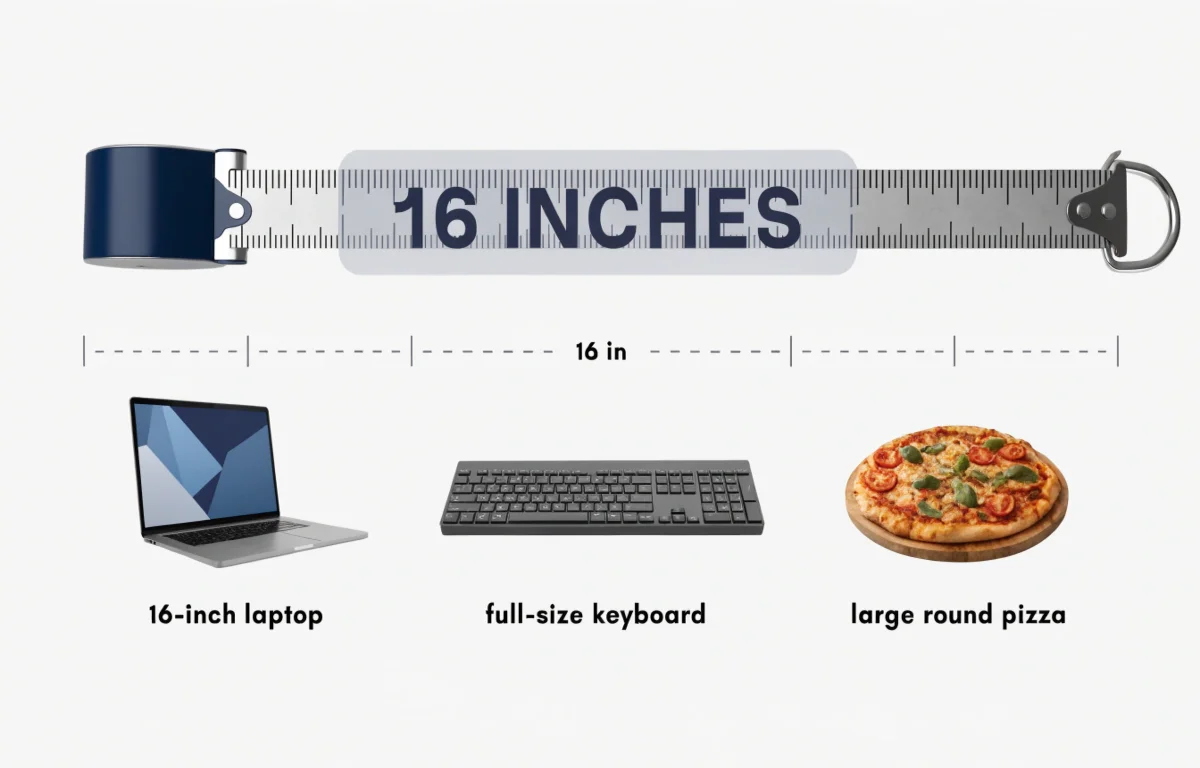
A 16-inch laptop screen, measured diagonally from corner to corner, is one of the most accurate everyday references for this length. This screen size is extremely common among professional and gaming laptops. If you use one daily, you already have a strong built-in sense of 16 inches.
Why this works: Laptop screens are standardized measurements, so the comparison is consistently accurate across brands.
Full-Size Desktop Keyboard
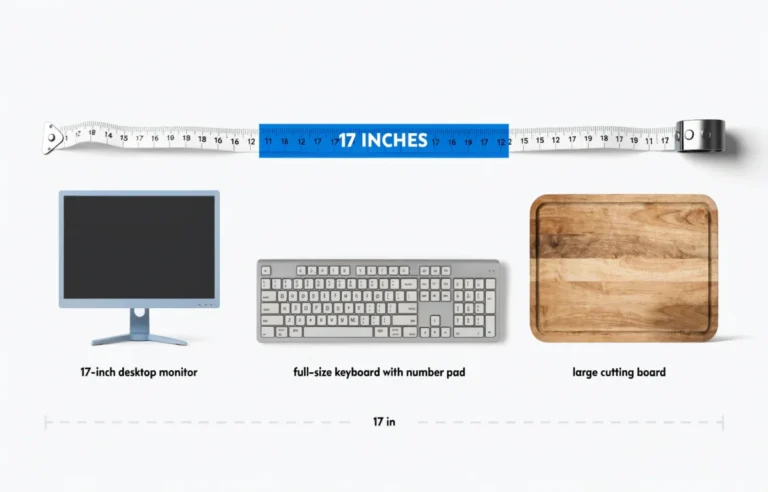
A standard full-size keyboard with a number pad measures approximately 16 to 17 inches across. The long, flat shape makes it easy to visualize the length clearly. Looking at a keyboard on a desk is one of the clearest single-glance references for 16 inches.
Why this works: Keyboards are flat, straight, and a familiar daily object for most people.
Large Kitchen Cutting Board
Many rectangular cutting boards designed for home kitchens are manufactured at 16 inches in length. This is considered the standard size for a “large” cutting board, providing enough surface for preparing most ingredients comfortably.
Why this works: The straight edges and defined shape make measurement estimation very easy.
Large Pizza (Diameter)
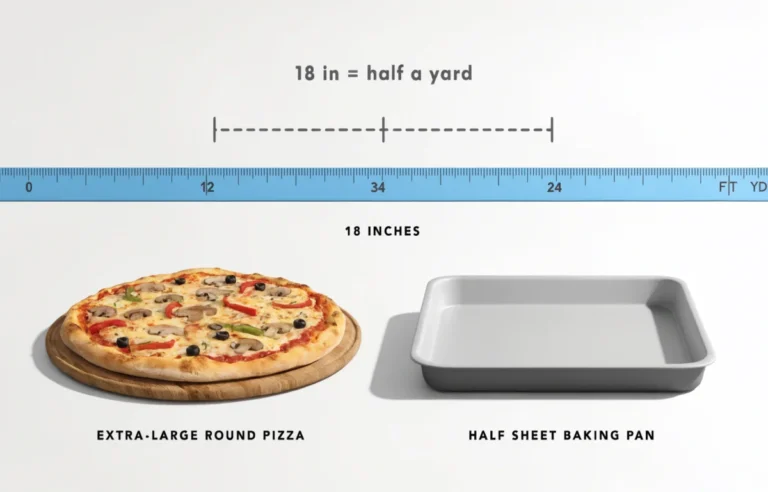
A large pizza at most pizza chains measures 16 inches in diameter, from one edge directly across to the other. The round shape and familiar size make this one of the most instantly recognizable references for this measurement.
Why this works: Almost everyone has seen a large pizza on a table, making the scale immediately clear.
Backpack Height
Many school and travel backpacks measure close to 16 inches in height when standing upright. This is the standard height range for a medium to large backpack designed to carry a laptop and daily essentials.
Why this works: Backpacks are three-dimensional objects people handle regularly, giving a physical sense of the size.
Carry-On Suitcase Width
Compact carry-on suitcases designed for overhead compartments often measure approximately 16 inches in width. This size is deliberately chosen to meet airline size restrictions while maximizing storage.
Why this works: The rectangular shape and solid construction make the 16-inch width easy to picture.
Medium Throw Pillow
Decorative throw pillows are commonly sold in 16×16 inch sizes. These square pillows are found on most sofas, beds, and chairs. Holding or picturing one gives an immediate square reference for 16 inches in both directions.
Why this works: Throw pillows are soft and flexible, but their consistent manufactured size makes them a reliable reference.
Standard Bowling Pin
A regulation bowling pin stands exactly 15 inches tall, just one inch under 16 inches. For practical estimation purposes, a bowling pin represents this length very closely.
Why this works: Bowling pins are strictly standardized objects with no variation.
How to Estimate 16 Inches Without a Ruler
- Picture a large pizza on a table
- Look at a full-size keyboard
- Open a 16-inch laptop
- Visualize one foot plus four finger widths
- Picture a medium backpack standing upright
How Long Is 16 Inches of Hair
Hair length is one of the most searched contexts for 16 inches, and understanding where this length actually falls is important for haircuts, extensions, and styling decisions.
Where Does 16-Inch Hair Fall on the Body?
16 inches of straight hair falls at approximately shoulder-blade level for most people. The exact position depends on height and where the hair grows from, but as a general guide:
- For shorter individuals (under 5’3″): 16 inches typically reaches the mid to lower back area
- For average height individuals (5’4″ to 5’7″): It usually falls right around the shoulder blades or just below
- For taller individuals (5’8″ and above): It tends to sit at the upper shoulder-blade area, closer to the upper back
What Does 16-Inch Hair Look Like?
16 inches of straight hair is considered medium-to-long length. It is noticeably longer than a bob or lob (which typically fall between 8 and 12 inches), and it has enough length for:
- Full ponytails that sit comfortably at the back
- Braids including box braids and single braids
- Half-up half-down styles
- Basic updos with some styling effort
- Straightened or blown-out styles that show the full length clearly
At 16 inches, hair is long enough to feel versatile for styling but not so long that it becomes heavy or difficult to manage for most hair types.
How Long Does It Take to Grow Hair to 16 Inches?
Hair grows at an average rate of about half an inch per month, or roughly 6 inches per year. Starting from:
- A pixie cut (2 to 3 inches): approximately 2.5 to 3 years
- A short bob (6 inches): approximately 1.5 to 2 years
- A medium lob (10 to 12 inches): approximately 8 to 12 months
These timelines assume minimal trimming and average growth rate. Individual growth varies based on genetics, nutrition, and hair care.
How Long Is 16 Inches of Curly Hair
Curly hair behaves very differently from straight hair when measuring length, and this is one of the most important distinctions people overlook.
Curl Shrinkage and What It Means for 16 Inches
Curly hair shrinks significantly when dry. The tighter the curl pattern, the more the hair appears shorter than its actual length. This is called shrinkage, and it can range from 20% to over 50% depending on the curl type.
For 16-inch curly hair:
- Wavy hair (Type 2): Minimal shrinkage, usually 10 to 15%. Hair falls close to where straight 16-inch hair would, around the shoulder blades.
- Loosely curly hair (Type 3A/3B): Shrinkage of around 20 to 30%. Hair may appear to fall around the collarbone or just below, even though it measures 16 inches when stretched.
- Tightly curly or coily hair (Type 3C/4A): Shrinkage of 30 to 40%. Hair may appear to sit at chin or neck level even though it is 16 inches long when stretched.
- Very coily or kinky hair (Type 4B/4C): Shrinkage can exceed 50%. A 16-inch length may appear to fall at ear level or even shorter when fully dry.
How to Measure Curly Hair Accurately
To get a true reading of curly hair length, gently stretch a single strand from root to tip while it is damp or straightened. This stretched length is the actual length. 16 inches measured this way is what stylists, extension suppliers, and wig manufacturers refer to.
What 16-Inch Curly Hair Looks Like in Practice
When people with naturally curly hair wear their hair in its natural state, 16 inches of curly hair often appears to fall much shorter than it actually is. Someone with 16-inch 4C hair may look like they have a short afro or very compact style, while someone with 16-inch wavy hair will see it nearly touching their shoulder blades.
How Long Is 16 Inches Hair Extensions, Weave & Wig
16 inches is one of the most popular lengths in the hair extensions, weave, and wig market. Understanding exactly what this length looks like on the body helps when buying online.
16-Inch Hair Extensions
Hair extensions at 16 inches add length and volume to natural hair. When applied, 16-inch extensions:
- Blend naturally with hair that is already 10 to 14 inches long
- Add noticeable length to shorter hair (6 to 8 inches) while maintaining a natural layered look
- Fall around the shoulder blade area on most average-height wearers
- Provide enough length for styling into ponytails, braids, and loose waves
Clip-in extensions at 16 inches are among the best-selling lengths because they are long enough to make a difference without being overly dramatic.
16-Inch Weave
A 16-inch weave refers to the length of the wefted hair bundles used in sew-in installations. At this length:
- The weave falls around the shoulder blade to mid-back area when installed
- It is considered a mid-length weave, versatile enough for everyday wear
- Straight weave at 16 inches hangs cleanly and allows for curling, straightening, or leaving in natural wave patterns
- Body wave or loose wave textures at 16 inches may appear slightly shorter due to the wave pattern compressing the length slightly
16-inch bundles are commonly bought in sets of 2 to 3 for a full sew-in installation, depending on the desired density and style.
16-Inch Wig
A 16-inch wig is measured from the hairline at the top of the cap to the ends of the hair. On the head:
- A 16-inch wig in a straight style falls around the shoulder blade area for most average-height wearers
- In a wavy style, it falls slightly shorter due to the wave pattern
- In a curly style, it may appear to fall at collarbone to shoulder level depending on the curl pattern and shrinkage
- This length is one of the most popular wig lengths because it is long enough to look clearly feminine and styled without being difficult to manage
When buying a wig online, a 16-inch measurement always refers to the hair length from the cap down, not the full circumference of the cap.
How Long Is 16 Inches Necklace & Chain
In jewelry, 16 inches is one of the most specific and commonly sold necklace lengths, and knowing where it sits on the body helps when buying online or as a gift.
Where Does a 16-Inch Necklace Sit?
A 16-inch necklace sits at the collarbone for most adults. This is often described as a collarbone-length or standard necklace. Specifically:
- It rests right along the collarbone or just below it
- It does not dangle noticeably below the chest
- It frames the neckline cleanly and is visible with most necklines
Standard Necklace Length Guide
| Length | Classification | Where It Falls |
|---|---|---|
| 14 inches | Collar | High on the neck |
| 15 inches | Choker | Base of throat |
| 16 inches | Standard/Collarbone | At or just below the collarbone |
| 18 inches | Princess | Just below collarbone |
| 20 to 24 inches | Matinee | Mid-chest |
| 28 to 36 inches | Opera/Rope | Below chest |
16-Inch Chain
A 16-inch chain follows the same positioning as a necklace of the same length. Whether the piece is a pendant chain, a gold chain, a silver chain, or a beaded chain, 16 inches means the total length from clasp to clasp is 16 inches and it will sit at the collarbone.
16-inch chains are most commonly sold as the default “standard” length for pendant necklaces because the collarbone position showcases pendants clearly without them sitting too high or too low.
Who Should Choose a 16-Inch Necklace?
A 16-inch necklace works best for people who:
- Want a necklace that sits at the collarbone rather than dangling
- Are wearing open necklines, V-necks, or scoop necks where a collarbone-length piece frames the look
- Prefer a clean, classic look that works with both casual and formal outfits
- Have an average or smaller neck size
People with larger neck circumferences may find 16 inches sits slightly higher than expected and may want to size up to 18 inches for a more comfortable fit.
How Long Is 16 Inches Baby
In the context of pregnancy and infant development, 16 inches is a meaningful measurement that marks a specific developmental stage.
Fetal Size at 16 Inches
A baby measuring 16 inches in length from crown to heel is typically around 30 to 32 weeks of gestation. At this stage:
- The baby weighs approximately 3 to 4 pounds
- The lungs continue developing and surfactant production is increasing
- Fat is building under the skin, giving the baby a rounder appearance
- Movement is active and strong enough to be clearly felt by the mother
- The baby has developed sleep and wake cycles and responds to external sounds
This period falls in the early to mid third trimester. Babies born at this stage require intensive neonatal care but have significantly higher survival rates compared to earlier preterm births.
Newborn Size Comparison
The average full-term newborn (38 to 40 weeks) measures between 18 and 22 inches. A 16-inch measurement at birth would indicate a premature infant, typically born around 30 to 34 weeks of gestation.
For context on growth stages:
- 20 weeks gestation: approximately 10 inches crown to heel
- 25 weeks gestation: approximately 13 to 14 inches
- 30 weeks gestation: approximately 15 to 16 inches
- 35 weeks gestation: approximately 18 inches
- Full term: 18 to 22 inches
Baby Products and 16 Inches
The 16-inch measurement also appears in baby products:
- Baby hats: Newborn head circumferences average 13 to 14 inches at birth, growing toward 16 inches by approximately 3 months of age
- Infant onesie length: Many newborn-size onesies measure close to 16 inches in total length from shoulder to crotch
- Baby dolls: Life-size newborn dolls and weighted baby dolls designed to simulate a real newborn are commonly manufactured at 15 to 17 inches
FAQ
Conclusion
16 inches is a measurement that appears across a surprising range of everyday situations. Laptop screens, cutting boards, pizza sizes, and backpacks all use it as a standard. In the hair world, 16 inches is one of the most popular lengths for extensions, weaves, and wigs because it sits at that ideal point between clearly long and easily manageable.
The key to remembering it: one foot plus four finger widths, or the diagonal of a standard large laptop screen. Once that image is locked in, 16 inches becomes easy to recognize anywhere you encounter it.