Google Block Breaker Mods: Source Code, Sprites, Sounds & Settings Guide 2026
The standard Google Block Breaker game is fun. But after a while, the same paddle, the same blocks, and the same sounds start feeling repetitive.
That’s where mods come in.
Google Block Breaker mods let you change almost everything — visuals, sounds, gameplay speed, block behavior, and more. Some mods are simple settings tweaks. Others replace entire visual elements. A few completely reinvent how the game feels.
This guide covers all of it. What mods exist, where to find source code and GitHub resources, how to work with sprites and sounds, and which settings to adjust for a better experience — explained in plain language, not developer jargon.
What Are Google Block Breaker Mods?
Google Block Breaker mods are custom changes made to the game’s original code or visual assets. They’re not official updates from Google. They’re created by players and developers who wanted something different.
Think of mods as personalization options for the game. Some people want a faster ball. Others want different visuals. Some want completely new block behavior. Mods make all of this possible.
Three main types of mods exist:
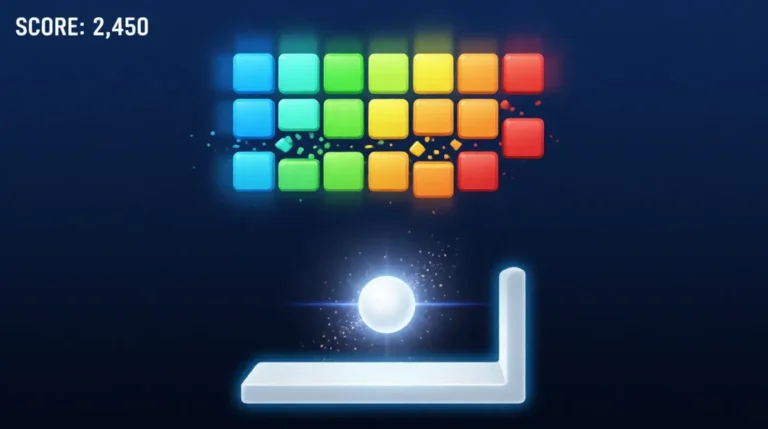
Visual mods change what you see — paddle designs, block textures, background themes, color schemes, and animation effects when blocks break.
Gameplay mods change how the game works — ball speed, paddle size, block durability, power-up frequency, and difficulty settings.
Audio mods replace the default sounds — block breaking effects, paddle hit sounds, background music, and UI feedback sounds.
You don’t need to be a programmer to use many of these. Simple settings changes require nothing more than a text editor. Visual mods involve swapping image files. More complex changes need basic JavaScript knowledge — but even those are beginner-friendly with the right resources.
Google Block Breaker Source Code — Where to Find It
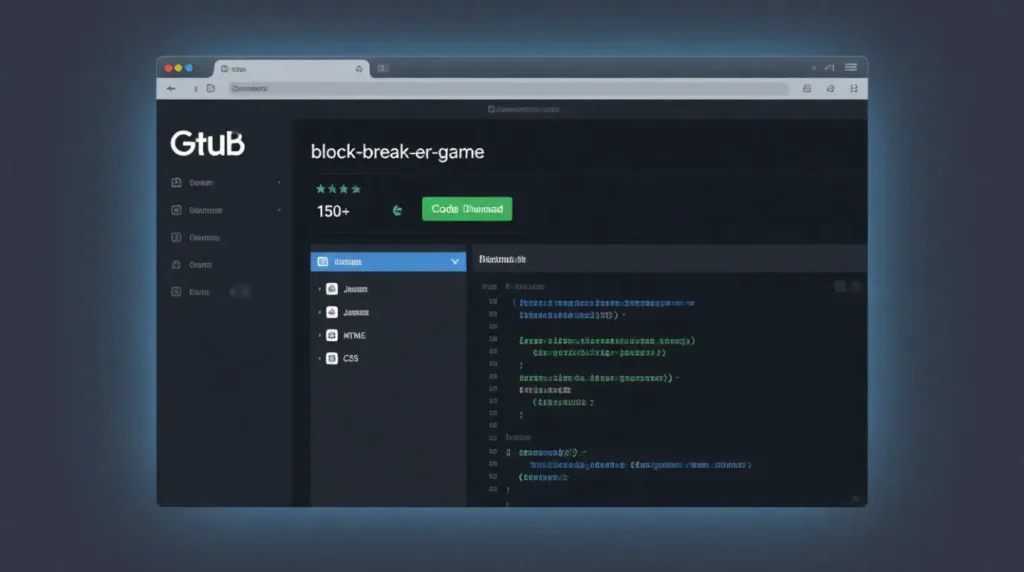
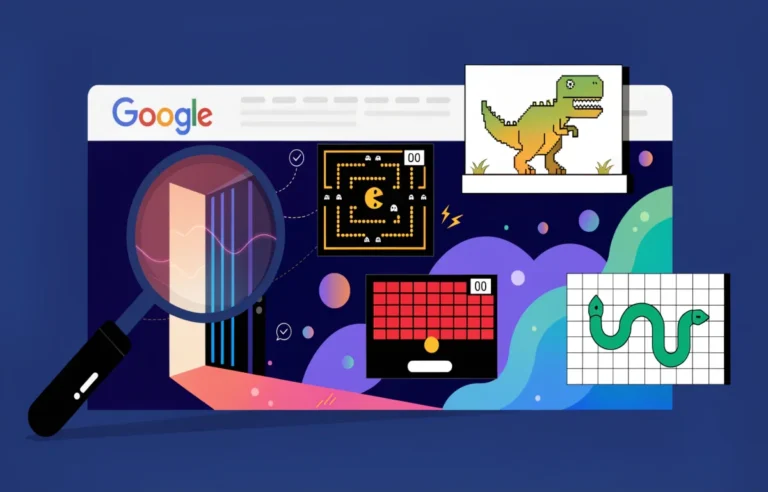
The google block breaker source code is your starting point for any modification. The game runs entirely in your browser using JavaScript and HTML5 Canvas — which means the code is accessible.
Method 1 — Browser Developer Tools:
Open Chrome and search “Google Block Breaker.” Launch the game. Press F12 to open developer tools. Go to the Sources tab. You’ll find the JavaScript files that run the game — ball movement, collision detection, scoring, and more are all there.
Method 2 — GitHub Repositories:
This is the easier option. Developers have already extracted, cleaned, and organized the original code into proper projects. Search GitHub for:
- “google block breaker”
- “block breaker game javascript”
- “breakout clone HTML5”
What to look for in a good repository:
- Clear README file with setup instructions
- Recent commits — shows the project is maintained
- 20+ stars — indicates community trust
- Commented code — explains what each section does
Always fork a repository before making changes. This creates your own copy so you can experiment safely without affecting the original.
Working With Google Block Breaker Code
Once you have the google block breaker code, here’s what you can actually change without needing advanced programming skills.
The key objects you’ll work with:
The paddle object stores position and size. Change the width value to make your paddle wider or narrower. Change the speed value to make it respond faster or slower to your input.
The ball object contains velocity and starting position. Increase velocity for a faster, more challenging game. Decrease it for a more relaxed experience where you have time to think.
The block arrays define the level layout. Each block has properties — color, how many hits it takes to break, and how many points it gives. These are easy to modify.
Most common code modifications players make:
Increasing ball speed is the most popular change — it makes the game feel more intense without changing anything else. Wider paddles help beginners who keep missing. Changing block point values lets you customize how scoring works.
Testing rule: Always test in a local browser first. Open the HTML file directly rather than uploading it anywhere. Change one thing at a time, test it, then move to the next change.
Google Block Breaker GitHub — Best Resources
The google block breaker github community has produced dozens of variants and forks. Here’s how to navigate them effectively.
Finding quality repositories:
Go to github.com and search “block breaker javascript.” Filter by language: JavaScript. Sort by Stars to see the most trusted projects first.
What different repo types offer:
Some repositories focus on clean code organization — these are best if you want to understand how everything works before modifying. Others focus on additional features like level editors, leaderboards, or multiplayer modes. Some are visual overhauls with modern graphics while keeping original mechanics.
Before using any repository:
Check when it was last updated. A repo that hasn’t been touched in 3+ years may have compatibility issues with modern browsers. Read the issues tab — if many bugs are reported and none are fixed, move on.
Contributing back:
If you fix a bug or add something useful, submit a pull request. Describe what you changed and why. This is how the modding community grows — everyone benefits from shared improvements.
Google Block Breaker Sprites — Custom Visuals
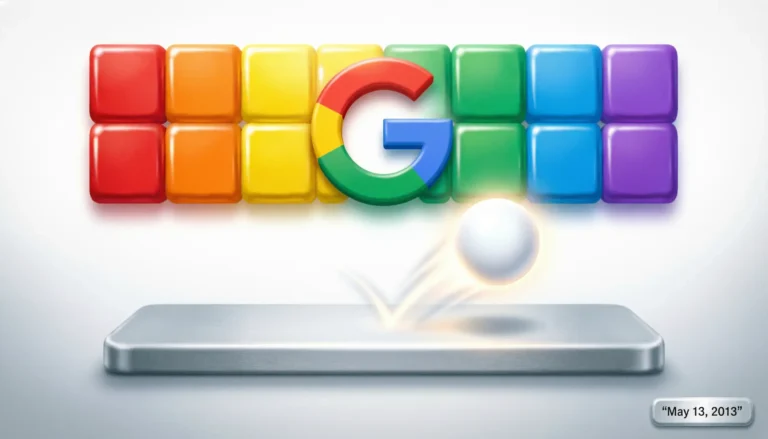
Google block breaker sprites are the visual elements of the game — the paddle, ball, blocks, background, and any effects when things break. Replacing these is one of the easiest ways to completely change how the game looks.
Understanding sprite basics:
Sprites are image files that the game loads and positions on the canvas. PNG format is recommended because it supports transparent backgrounds, which lets sprites blend naturally into the game environment.
Recommended sprite dimensions:
| Element | Recommended Size | Format |
|---|---|---|
| Paddle | 100×20 pixels | PNG |
| Ball | 16×16 pixels | PNG |
| Standard block | 60×20 pixels | PNG |
| Background | 800×600 pixels | PNG or JPEG |
Where to find replacement sprites for free:
OpenGameArt.org — large collection of free game graphics, many specifically for breakout-style games. Filter by license to find ones you can use freely.
Itch.io — game asset marketplace with both free and paid sprite packs. Search “breakout sprites” or “arcade game assets.”
Kenny.nl — clean, well-organized free game assets. Their arcade packs work well for block breaker styles.
Creating your own: GIMP is free and handles pixel art well. Even simple designs — different colored rectangles with rounded corners — can make the game feel completely different.
Implementing new sprites:
Find where sprites load in the JavaScript code — look for image file paths. Replace those paths with your new file locations. Keep your new sprites in the same folder as the original files to avoid path issues.
Google Block Breaker Sounds — Custom Audio
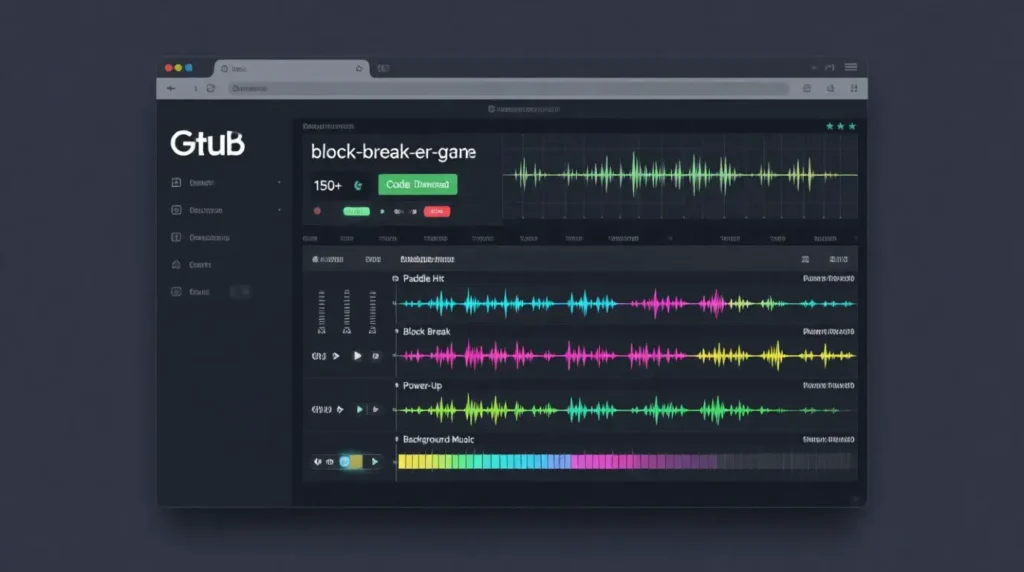
Google block breaker sounds create the feedback loop that makes gameplay satisfying. The crack of a block breaking, the thud of the paddle hit, the background music — these details matter more than most people realize.
Types of sounds in the game:
Collision sounds play when the ball hits the paddle or walls. Block breaking sounds trigger when blocks disappear — varying these by block type or color adds satisfying variety. UI sounds handle menu interactions and game over moments. Background music sets the overall tone — it should loop seamlessly.
Where to find free audio files:
Freesound.org — thousands of free sound effects. Search “impact,” “break,” “hit,” or “pop” for relevant options. Check license requirements — most need attribution but are free to use.
Zapsplat.com — clean, professional sound effects with a free tier. Good for UI sounds and impact effects.
Mixkit.co — completely free sound effects with no attribution required. Smaller library but easy to use.
Creating your own: Audacity is free audio software. You can record real objects — tapping glasses, snapping wood — and process them into game-ready sounds.
Implementation:
Audio files load similar to sprites — find the file paths in the JavaScript and replace them with your custom sounds. Use MP3 format for broadest browser compatibility. Keep block-breaking sounds short — under 0.5 seconds. Long sounds overlap with rapid gameplay and become noise.
Volume tip: Test sounds during actual gameplay, not just in isolation. What sounds right in an audio editor often feels too loud mid-game.
Google Block Breaker Settings — Key Parameters to Adjust
Google block breaker settings control the fundamental feel of the game. Even without touching visual elements or sounds, adjusting these values changes the entire experience.
The most impactful settings:
Ball speed — the single most powerful difficulty control. Small increases feel significant during gameplay. Start with 10-15% increases rather than dramatic changes.
Paddle width — wider means easier, narrower means harder. This is the quickest way to adjust difficulty for different player skill levels.
Block durability — standard blocks break in one hit. Changing certain blocks to require 2-3 hits adds a puzzle layer to the game.
Lives count — three is traditional but completely adjustable. Five lives makes the game accessible for beginners. One life creates an extreme challenge mode.
Power-up frequency — how often power-ups drop from broken blocks. Higher frequency makes the game feel more chaotic and dynamic.
Creating difficulty levels using settings:
| Setting | Easy | Normal | Hard |
|---|---|---|---|
| Ball speed | 70% | 100% | 140% |
| Paddle width | 130px | 100px | 70px |
| Lives | 5 | 3 | 1 |
| Block durability | 1 hit | 1-2 hits | 2-3 hits |
Google block breaker modifiers — this term refers to these same gameplay variables. When you see “modifiers” mentioned in modding communities, they’re talking about these core settings that modify how the base game behaves.
Advanced Mod Ideas
Once you’re comfortable with basic changes, these ideas push further:
Power-up systems — code random drops from destroyed blocks. Ball multipliers, sticky paddle (ball sticks briefly so you can aim), laser shots that destroy blocks directly, and paddle extension drops all add strategic depth.
Custom level layouts — instead of the default block arrangement, design your own patterns. Store block positions in a simple array and load them at game start. This creates entirely different gameplay experiences without changing any mechanics.
Difficulty progression — make the game automatically get harder as you advance. After every cleared level, slightly increase ball speed and decrease power-up frequency. This creates a natural skill curve.
Score multipliers — add a multiplier that increases with consecutive hits and resets when the ball falls. This rewards controlled, aggressive play and dramatically changes how people approach scoring.
Frequently Asked Questions
What are Google Block Breaker mods? Google Block Breaker mods are custom modifications to the game’s code or visual assets. They change graphics, sounds, gameplay rules, or add new features. Players create mods to personalize their experience beyond the standard game.
Where can I find Google Block Breaker source code? The source code is accessible through browser developer tools — press F12 while the game is running and check the Sources tab. Alternatively, search GitHub for “block breaker javascript” to find clean, organized versions that are easier to work with.
How do I use Google Block Breaker GitHub resources? Search GitHub for block breaker repositories. Fork the project to your own account before making changes. Download the code, modify it in any text editor, and test by opening the HTML file in your browser. Start with small changes and test each one before adding more.
Can I customize Google Block Breaker sprites easily? Yes — find where the image files load in the JavaScript code and replace those file paths with your own images. Match the original dimensions initially to prevent sizing issues. PNG format works best because it supports transparent backgrounds.
What Google Block Breaker modifiers affect difficulty most? Ball speed and paddle width have the biggest impact. Increasing ball speed by 20-30% makes the game noticeably harder. Reducing paddle width by 30px adds significant challenge. Block durability and lives count are secondary but meaningful difficulty controls.
Are Google Block Breaker sounds easy to change? Yes — find audio file paths in the JavaScript and replace them with your custom files. Use MP3 format for compatibility. Download free sound effects from Freesound.org or Zapsplat.com. Keep breaking sounds short to avoid overlapping during rapid gameplay.
What settings should I change first as a beginner? Start with ball speed — it’s one variable and immediately changes how the game feels. Then try paddle width. These two settings alone let you create easy, normal, and hard difficulty versions of the game without touching anything else.
Final Thoughts
Google Block Breaker mods range from simple one-line settings changes to complete visual overhauls. You don’t need to start with the complex stuff.
Change the ball speed. Swap one sprite. Replace a sound effect. Each small change teaches you something and makes the game more yours.
The source code is accessible, GitHub resources are plentiful, and the modding community is welcoming. Start with what interests you most — visuals, sounds, or gameplay feel — and build from there.
Ready to play the base game before modding it? Play Google Block Breaker on our homepage and get familiar with what you’re working with first.